
Affiliate Disclosure: This post may contain affiliate links. If you buy through one of them, we may earn a commission at no extra cost to you. Read our full Affiliate Disclosure for details.
Deep sleep is the stage most linked to physical recovery, and it’s also one of the hardest stages for a wrist or ring sensor to detect accurately. Unlike overall sleep/wake detection, where most devices do reasonably well, deep sleep staging is where consumer wearables diverge the most from each other, and from the gold standard, polysomnography.
This guide looks specifically at which wearables perform best for deep sleep detection, based on published, peer-reviewed research rather than marketing claims, and explains why the research doesn’t all point to the same winner.
Quick Answer
- Best overall for deep sleep accuracy: Oura Ring (Gen 3, 4 and 5), the top or near-top performer in more than one independent study
- Strong alternative: Google Pixel Watch, which outperformed several rivals for deep sleep specifically in one large multicenter study
- Weakest for deep sleep specifically: Apple Watch, which independent testing found tends to overestimate deep sleep
What «Deep Sleep Accuracy» Actually Means
Polysomnography (PSG) is an in-lab sleep study that records brain waves, eye movement, muscle activity and breathing to classify sleep into stages, including deep (slow-wave) sleep. Consumer wearables estimate sleep stages indirectly, mainly from movement and heart rate patterns, so their deep sleep numbers are always an approximation, not a direct measurement. That’s why the studies below compare wearables against PSG rather than against each other.
What the Research Shows
Oura performed best in a Brigham and Women’s Hospital study
A 2024 study in the journal Sensors, independently conducted at Brigham and Women’s Hospital (funded by Oura), compared the Oura Ring, Apple Watch and Fitbit Sense against PSG in a single-night inpatient study. Oura had the highest sensitivity for deep sleep detection (79.5%) among the three, and the study noted that, unlike Apple Watch, Oura did not significantly overestimate deep or light sleep.
A separate multicenter study found Pixel Watch and Fitbit stronger specifically for deep sleep
A 2023 multicenter validation study published in JMIR mHealth and uHealth tested 11 consumer sleep trackers, including the Pixel Watch, Galaxy Watch 5, Fitbit Sense 2, Apple Watch 8 and Oura Ring 3, against PSG in hospital sleep clinics. That study found the Google Pixel Watch and Fitbit Sense 2 showed an edge specifically in the deep sleep stage, a different result from the Brigham and Women’s study above.
A 15-device sleep lab study found Apple Watch weaker for deep sleep
Independent lab testing covered by health and fitness outlets in 2026, involving 15 wearables including Garmin, Whoop and several rings, found Apple Watch excelled at detecting wake time but specifically struggled with deep sleep accuracy, while Oura remained the most consistent across all four sleep stages.
Why the studies don’t fully agree
Different studies use different participant groups, algorithm versions and statistical methods, so it’s normal for rankings to shift, especially for a genuinely hard problem like deep sleep staging. The consistent pattern across studies is that Oura ranks at or near the top and Apple Watch tends to overestimate deep sleep, while Fitbit and Google’s results vary more by study and device generation.
Comparison Table
| Device | Deep Sleep Performance | Source |
|---|---|---|
| Oura Ring | Highest sensitivity (79.5%), no significant over/underestimation | Sensors, 2024 (Brigham and Women’s Hospital) |
| Google Pixel Watch | Showed an edge in deep-stage detection | JMIR mHealth and uHealth, 2023 |
| Fitbit Sense 2 | Showed an edge in deep-stage detection (same study) | JMIR mHealth and uHealth, 2023 |
| Apple Watch | Tended to overestimate deep sleep; struggled with deep sleep accuracy | Sensors, 2024; 2026 15-device lab study |
| Garmin | Mid-to-low tier overall across sleep stages | 2026 15-device lab study |
Our Recommendation
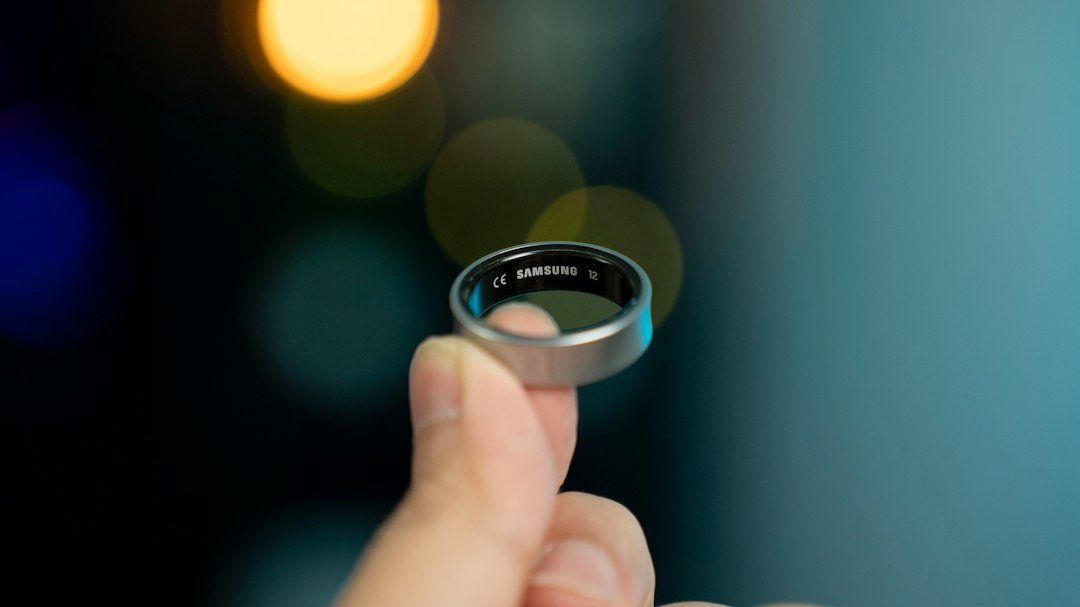
If deep sleep tracking is your main reason for buying a wearable, the Oura Ring has the strongest overall track record across independent studies, and it’s also rated the most consistent performer across all sleep stages, not just deep sleep. See our full best sleep tracker 2026 guide for the wider picture, or our Oura Ring 4 vs Ring 5 comparison if you’re deciding which generation to buy.
If you’re set on a smartwatch rather than a ring, the Pixel Watch’s showing in the JMIR study makes it a reasonable pick over Apple Watch specifically for deep sleep, though Apple’s watch still does well on other sleep metrics like wake detection.
Frequently Asked Questions
Which wearable is most accurate for deep sleep?
Across the largest body of independent research, the Oura Ring has the strongest and most consistent track record for deep sleep detection, though one study found the Google Pixel Watch and Fitbit Sense 2 performed well on this specific metric too.
Why do different studies rank devices differently for deep sleep?
Studies vary in sample size, participant health, algorithm versions and statistical scoring methods. Deep sleep is also one of the harder stages to classify from movement and heart rate data alone, so results are more sensitive to these differences than simpler sleep/wake detection.
Does Apple Watch accurately track deep sleep?
Independent studies have found Apple Watch tends to overestimate deep and light sleep compared with polysomnography, and it performs relatively better at detecting when you’re awake.
Can any consumer wearable replace a sleep study?
No. Even the best-performing wearables in these studies are estimates compared with in-lab polysomnography, and none are a substitute for a clinical sleep evaluation if you suspect a sleep disorder.
The Bottom Line
For deep sleep tracking specifically, published research points most consistently to the Oura Ring, with the Google Pixel Watch and Fitbit Sense 2 as reasonable alternatives and Apple Watch the weakest performer on this particular metric. Treat all of these numbers as estimates to spot trends over time, not as a diagnosis.
Last updated: September 2026.
This article was researched and written by our editorial team using the peer-reviewed sources below, following the process described on our About Us page. It is not written or reviewed by a medical professional.
Sources
- Sleep Review — summary of the Sensors (2024) Oura/Apple/Fitbit accuracy study
- JMIR mHealth and uHealth — multicenter validation study of 11 consumer sleep trackers vs polysomnography
- 15-wearable sleep lab study summary
Medical Disclaimer: This article is for informational purposes only and does not constitute medical advice. Consumer sleep trackers are wellness devices, not medical devices, and are not a substitute for polysomnography or a clinical sleep evaluation. Always consult a qualified healthcare provider if you have concerns about your sleep or suspect a sleep disorder.